Contact us
 Visit CPRE.org
 Donate
Dark Skies: January 2026
A Fiery Start: The Quadrantids Meteor Shower
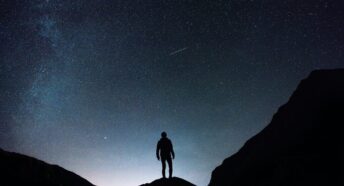
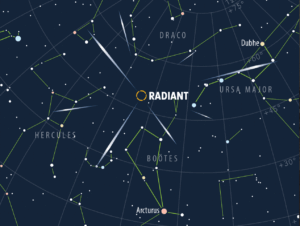
We begin the year with a strong meteor shower – the Quadrantids. Their peak has already passed on the 3rd and 4th of January, gracing us with an absolutely fabulous clear sky and a full moon. This shower is always a treat: meteors that vary in colour from bluish to whitish to yellowish, with rates reaching up to 120 per hour. They’ll continue to appear until the middle of the month before gradually petering out.
This shower takes its name from the now-obsolete constellation Quadrantids Muralis (pictured below), and if you want to try spotting a few lingering meteors, simply face north, sit back, and wait. These bright streaks are thought to originate from Asteroid 2003 EH – a 3km-wide space rock hurtling through our cosmic neighbourhood.
Comets on the Move
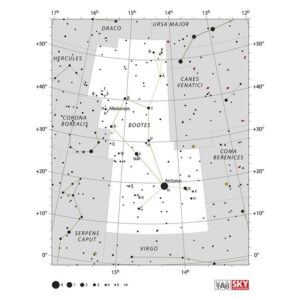
Throughout January, February, and March, Comet 24P/Schaumasse will be visible for most of the night. It made its closest approach to Earth on 4th January and will drift through the starry regions of Virgo, Boötes, and Serpens.
While you’re exploring Boötes, it’s worth brushing up on how to find this lovely constellation – a useful guide is linked above in the original text.
And for something truly special, head to NASA’s website and look up Comet 3I/ATLAS – NASA Science This is a rare interstellar visitor – a comet not bound to any star at all. It’s difficult to view with the naked eye, but fascinating to follow online. Definitely worth a look.
Planet Watching: Eyes South
If planets are more your thing, cast your gaze south. One planet is currently impossible to miss – shining brilliantly at opposition, meaning it sits directly opposite the sun and is at its brightest.
Naked‑eye views are already spectacular, but with a small telescope or even binoculars you can begin to spot some of the planet’s atmospheric features. Through a telescope you might catch glimpses of storms and bands, including the famous Great Red Spot. Through binoculars, tiny pinprick moons will appear, orbiting calmly around it.
By the time this appears on Facebook, the close encounter with the Moon will have passed, but fear not – Jupiter will be spectacularly close to the Moon once again on 31st January.
Dates for the Diary: North Yorkshire Dark Skies Festival
Every year, North Yorkshire celebrates the wonders of the night sky with a dedicated festival that draws thousands of visitors to marvel at planets, stars, and galaxies under some of the best dark skies in the UK.
Both the Yorkshire Dales National Park and the North York Moors National Park achieved International Dark Skies Reserve status five years ago this month – placing them alongside world‑renowned locations like the Grand Canyon, Death Valley, Mont‑Mégantic in Canada, and Namibia’s NamibRand Nature Reserve.
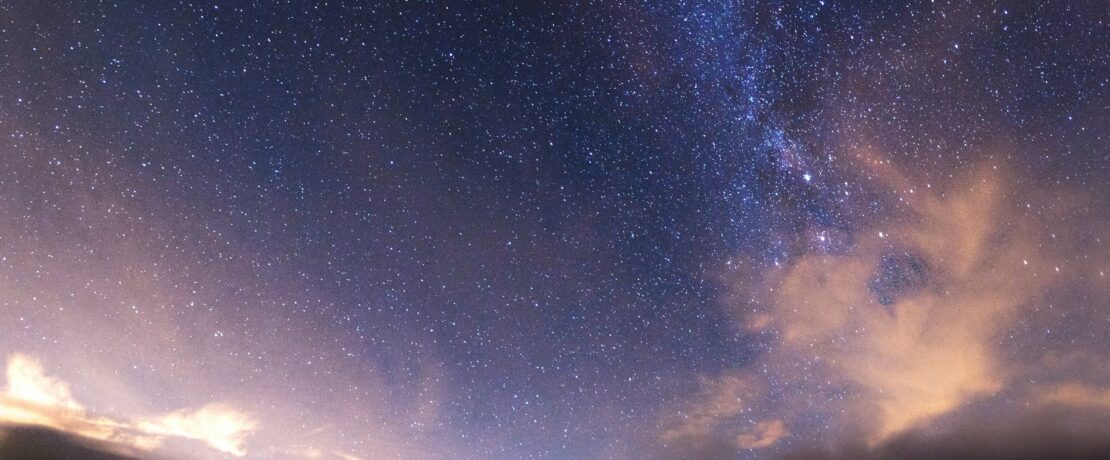
North Yorkshire’s landscapes offer breathtaking night views: thousands of stars overhead, distant planets, and the glittering sweep of the Milky Way arching above hills and valleys. The Dark Skies Festival makes the most of this, with events for families, beginners, astrophotographers, and seasoned stargazers alike.
Local astronomy clubs and star‑loving organisations help bring the skies to life with talks, guided viewings, night walks, and hands‑on craft and science sessions.
The next festival runs from Friday 13 February to Sunday 1 March 2026 – well worth marking in the diary.
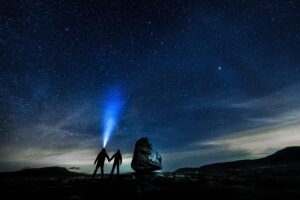
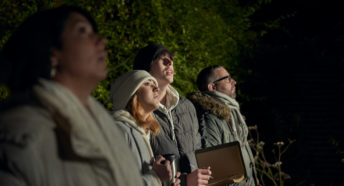
Stargazing at Twistleton Scar. Credit: Danny Law